If there’s one truth about domestic and family violence we need to confront – it’s that nothing we do will make it disappear overnight.
Reducing the prevalence of DFV is long-term work.
Some people use this fact as a reason to hesitate; to dilute investment into DFV services because it’s “pouring money into a bucket full of holes” (yes, we’ve heard that one recently!)
A reminder – that logic is deeply flawed.
We don’t stop funding hospitals because we can’t get rid of illness.
We don’t reduce funding for fire services because we know there will be more bushfires each summer.
We don’t question whether to resource police because there’s no way to fully eliminate crime.
We simply understand that these services are essential. We will always need to pour money into them, not because they make the problem vanish, but because they save lives, reduce harm, and give people the chance to recover.
The same logic applies to domestic and family violence services.
Every week across NSW, our members face rising referrals, more complex cases, and longer waitlists. The cost-of-living crisis, housing shortage, and increased community awareness all mean more people are reaching out for help. Yes, this is good – it shows that victim-survivors are willing to seek safety and support.
The problem is these services haven’t had an increase to their core funding in over a decade.
What does this mean? It means a false sense of safety for victim-survivors. We’re telling them to jump into our safety net – but gaps in government funding have left it full of holes, and now too many are falling through into greater harm.
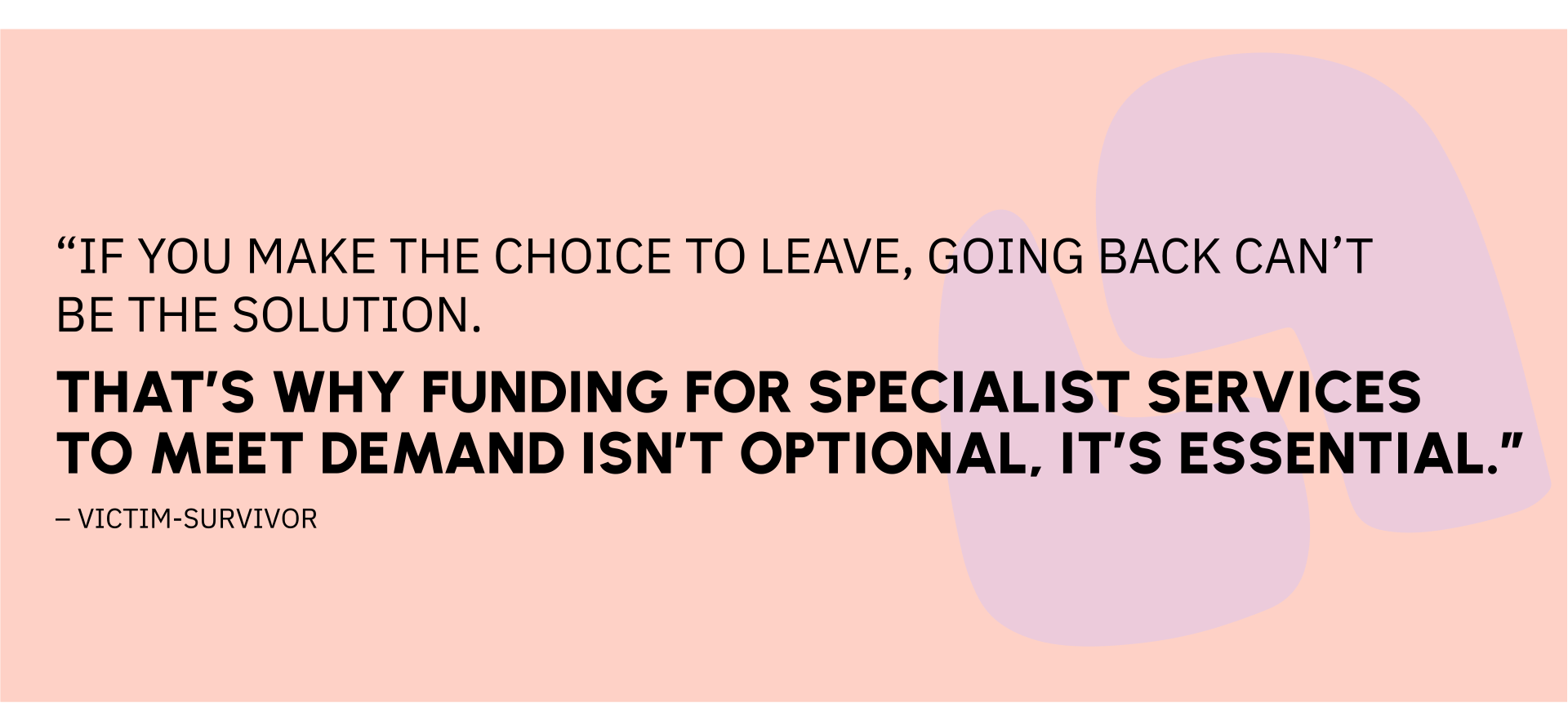
The single biggest step we can take right now is to increase core funding by 50%.
Why? Because these specialist DFV services are operating at extraordinary levels above their funded capacity to meet escalating demand. Staff are working unpaid overtime, fundraising in their spare time, paying for food vouchers out of their own pockets, picking up excessive client loads – doing everything possible to keep women and children safe, knowing that turning someone away can mean life or death.
As one member put it;
“The government have become reliant on us going the extra mile but that’s wearing very thin.”
A recent member survey we conducted showed that services are routinely supporting 152% more clients on average, than they’re funded to. Some report service levels exceeding 800-900% over funded capacity.
With numbers like this, it’s hard to avoid the reality that the DFV workforce is being exploited.
We know they’re so committed to what they do that they’ll turn up day after day, paid or unpaid – putting their own wellbeing on the line to keep women and children safe.
And somewhere along the line, that’s become a business model. Why invest in the bottomless bucket if frontline workers will step up and do the work for nothing?
Goodwill is not a funding model. We can’t keep expecting a workforce to carry the burden without matching their dedication with resources.
This is not just about money – it is about dignity and respect.
Victim-survivors deserve to know that when they reach out, there will be a safe service to meet them.
Workers deserve to know they can do their jobs without burning out or facing constant uncertainty about whether their organisation will survive another year.
Communities deserve to know that safety is not being left to chance.
The question is not whether funding DFV services will end violence. The question is why we can’t set aside a mere 0.1% of the state budget to give this workforce the chance to fix the net and catch everyone who needs support.
We may not end domestic and family violence tomorrow. But that can’t be an excuse for inaction.
Fund the frontlines, give safety a fighting chance.